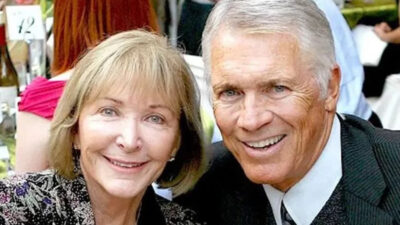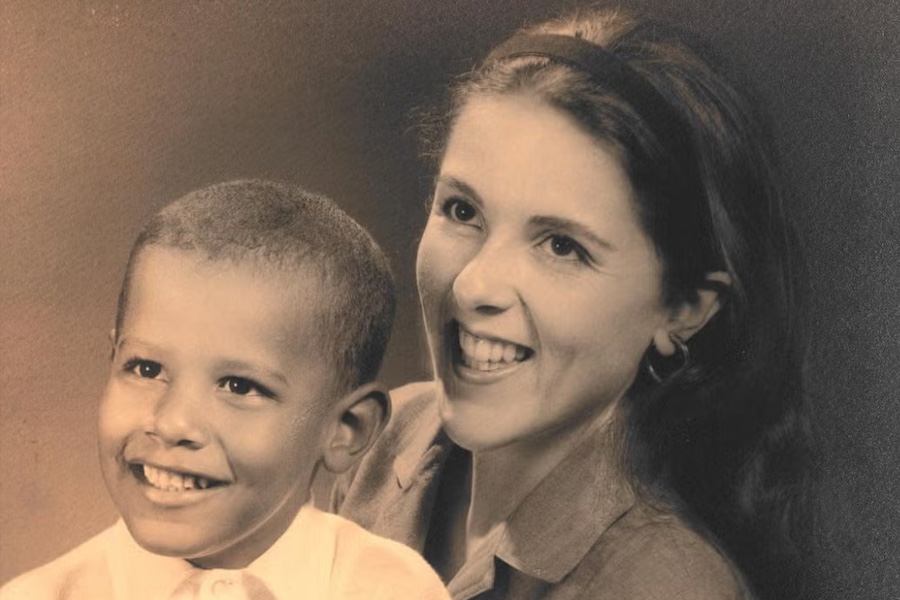
Early Roots in Massachusetts
Ruth Nidesand was born Ruth Beatrice Baker on January 14, 1937. She entered life in Suffolk, Massachusetts, within a family shaped by Lithuanian-Jewish inheritance. That background likely fostered diligence, prudence, and a durable sense of communal obligation. Her parents were Maurice Joseph Baker and Ida Baker. Her upbringing unfolded in an American setting where immigrant families often prized education and composure. Those values later became visible in the way she moved through many worlds.
Boston formed the first broad horizon of her life. It was a city of institutions, rigor, and practical ambition. Ruth eventually graduated from Simmons College in 1958 with a business degree. That achievement signaled discipline and intellectual readiness. It also placed her within a generation of women broadening their civic possibilities. Her early formation combined precision with quiet social resolve.
Education and Formation
Her studies at Simmons College gave her a structured foundation. Business training requires numerical fluency, order, and attention to consequence. Ruth did not remain confined by those technical skills. She moved toward teaching, a vocation with intimate human demands. That shift suggests an instinct for service rather than display. It also hints at a woman comfortable working within systems while nurturing individual growth.
The year 1958 marked more than graduation. It marked the beginning of adult autonomy. Ruth stepped into a period when women’s professional lanes were still constrained. Yet she later shaped a career that crossed those constraints. Her life would become less about corporate ascent and more about social continuity. In that sense, her education became a tool for stewardship.
A Meeting in Cambridge
In late 1964, Ruth met Barack Obama Sr. in Cambridge, Massachusetts. He was at Harvard, absorbed in scholarship and aspiration. She encountered a man whose intellectual intensity was matched by international seriousness. Their meeting altered the trajectory of her life. The connection moved quickly, and by December 24, 1964, they married in Kenya. That civil ceremony joined Boston and Nairobi in one decisive bond.
The marriage reflected uncommon boldness. Ruth chose relocation, intimacy, and uncertainty in one motion. Few personal decisions carry such geographic amplitude. She crossed from New England into East Africa, where climate, custom, and social texture differed sharply. That move reveals a temperament open to risk and adaptation. It also introduced her to a life lived between continents.
Nairobi Years
In Nairobi, Ruth centered her labor on education. She worked as a teacher and later served as a private kindergarten director. Both roles demanded patience, attentiveness, and a firm practical touch. Children require structure without stiffness, and Ruth appears to have supplied exactly that. Her professional life in Kenya was grounded in daily instruction. It also placed her at the heart of community life.
Her home life in Nairobi was equally layered. She and Barack Obama Sr. had two sons there, Mark in 1965 and David in 1967. The family occupied a space shaped by American origin, Jewish heritage, and Kenyan circumstance. Such a household required cultural dexterity. Languages, customs, and expectations would have mingled constantly. Ruth’s steadiness likely made that mixture livable.
Nairobi in the 1960s was a city of motion and promise. New institutions were forming, and urban life was gaining definition. Within that setting, a kindergarten director held genuine importance. Early education influences social temperament and later learning. Ruth’s work therefore reached beyond the classroom walls. It touched the social future of the children in her care.
Marriage And Separation
The marriage began to fray by 1971. Ruth and Barack Obama Sr. separated that year. Their divorce followed in 1973. Such endings often redraw identity as much as they end partnership. Ruth returned to the United States after the divorce. Later, she remarried and adopted the surname Nidesand.
The shift from married life in Nairobi to a later American life suggests notable resilience. Many people experience disruption. Fewer rebuild with quiet persistence. Ruth appears to have done exactly that. Her later years remained more private, but the outline is clear. She adapted to change without turning her life into spectacle.
A brief timeline helps clarify the arc:
| Year | Event |
|---|---|
| 1937 | Born in Suffolk, Massachusetts |
| 1958 | Graduated from Simmons College |
| 1964 | Married Barack Obama Sr. |
| 1965 | Birth of Mark |
| 1967 | Birth of David |
| 1971 | Separated |
| 1973 | Divorced |
| 2002 | Mark moved to China |
Motherhood Across Borders
Ruth was mother to three sons. Mark Okoth Obama Ndesandjo was born in 1965. David was born in 1967 and died in the late 1980s after a car accident. Joseph Nidesand was born around the 1980s from her later marriage. Motherhood in Ruth’s life was therefore not static. It spanned different decades, households, and emotional climates. That breadth gives her story a distinct gravity.
Mark’s later life reflects the family’s transnational character. He moved to China in 2002 and built a career as an author, musician, and calligrapher. His creative work has often engaged identity and displacement. David’s life ended much earlier, leaving a wound that family memory would retain. Joseph remained largely outside the public eye. Together, the three sons trace separate paths from one maternal origin.
Ruth’s role as mother also connects to education in a deeper way. Parenting and teaching often share the same disciplined tenderness. Both require timing, observation, and restraint. Her life suggests competence in both arenas. She helped guide children in classrooms and within her own household. That combination is not trivial. It formed the durable center of her biography.
Heritage And Family Web
Ruth’s Lithuanian-Jewish heritage mattered as more than a label. It linked her to a long history of migration, endurance, and cultural continuity. Such inheritance often shapes family habits and values. Education, responsibility, and kinship coherence are common priorities. Through Ruth, those traits traveled into a new set of family circumstances. They entered a Nairobi home with global resonance.
Her family connections also became historically notable through Barack Obama Sr. and their descendants. She became part of a larger web that included Barack Obama’s half-siblings. This made her life relevant to a broader public narrative. Yet she herself remained comparatively reserved. That contrast is telling. Some people become famous by pursuing publicity. Others become historically significant while avoiding it.
Later Life and Public Quiet
After returning to the United States, Ruth kept a low profile. Public attention rarely centered on her personal affairs. That scarcity of exposure can obscure a life’s seriousness. Yet privacy does not imply emptiness. It can signal deliberate self-containment. Ruth’s later years appear to have been lived with that kind of composure.
Her professional identity remained tied to education. Her family identity remained tied to motherhood and lineage. Her geographic identity stretched from Boston to Nairobi and back again. Those movements created a life with uncommon range. She inhabited both ordinary duties and unusual historical proximity. That combination gives her story its particular shape.
Key Takeaways
Ruth Nidesand was born in 1937 in Massachusetts and graduated from Simmons College in 1958. She moved to Kenya after marrying Barack Obama Sr. on December 24, 1964. In Nairobi, she worked in education and raised two sons, Mark and David. She later returned to the United States, remarried, and became mother to Joseph as well. Her life joined immigrant heritage, transcontinental movement, and family responsibility in a remarkably steady pattern.