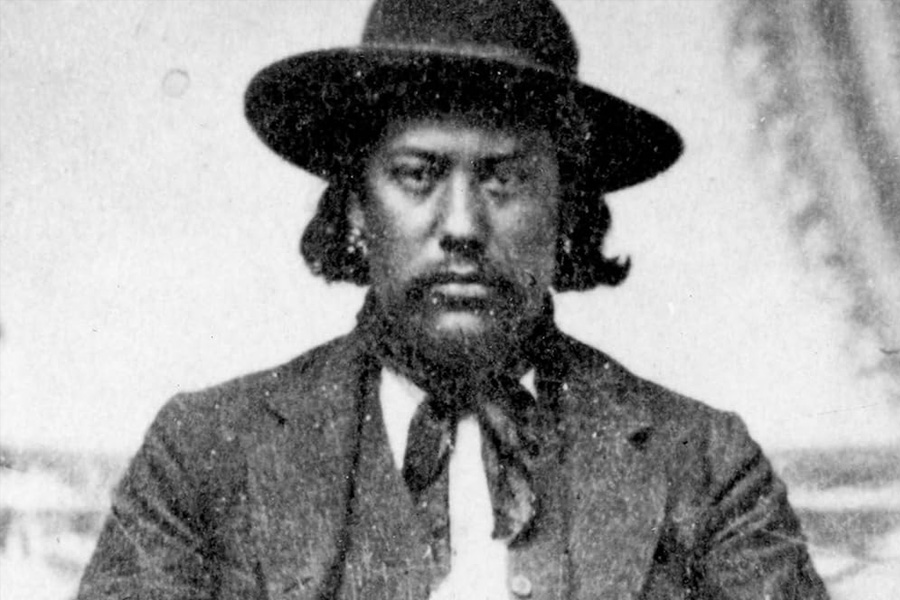
A Frontier Life Shaped by Labor
Hiram Thorpe remains a shadowed yet compelling figure in Native and Oklahoma family history. He lived from about 1852 to 1904, during a harsh frontier century. His name endures because it anchors the family of Jim Thorpe.
He was not a public celebrity. He was a working man shaped by land, animals, and endurance. His life belonged to a practical world where stamina mattered more than ornament.
Early Years in Kansas and Indian Territory
Hiram’s early years are not preserved with modern precision. Even so, historical memory places him within Sac and Fox life and Kansas roots. Later, his family moved into what became Oklahoma.
That movement mattered. It placed him in a liminal region where Native families, settlers, and changing governments overlapped. Identity there was rarely simple, and Hiram’s story reflects that complexity.
He seems to have lived with strong physical discipline. Family memory describes him as a hunter and horseman. Those skills were not decorative. They were survival arts.
He understood weather, distance, and animal behavior. He likely moved through open country with confidence. In that setting, a steady body could mean a steady household.
Charlotte Vieux and the Home Place
Charlotte Vieux is the spouse most often attached to Hiram’s name. Through her, the domestic world around him becomes clearer. Their household formed the center of a large and demanding family.
The home was probably modest. It may have been a cabin or a plain frontier dwelling. Either way, it was a place of ceaseless labor.
Children would have filled the space with motion and noise. Horses, dust, chores, and weather would have shaped each day. This was a household built by work, not display.
Charlotte also links Hiram to the next generations. Through her, the Thorpe family line reaches Jim Thorpe and later descendants. Her role is central to the family’s continuity.
Children and the Family Line
Hiram and Charlotte are most often associated with eight children. Their names are Minnie, Frank, George, Charlie, Jim, Mary, Adeline, and Edward. Some records vary, but these names recur often.
Jim Thorpe was born in 1888. His twin brother Charlie matters just as much in family memory. Their shared childhood suggests a closer emotional symmetry than fame usually allows.
Later generations carried the name forward. Jim Thorpe Jr. appears in the family line. Grace Thorpe, Charlotte Thorpe, and Dagmar Thorpe also extend the lineage.
The family pattern reveals more than ancestry. It shows inheritance in motion. Each generation carried memory, identity, and expectation into a changing world.
Work with Horses Hunting and Survival
Hiram’s daily life appears rooted in horses, hunting, ranching, and informal trade. Those activities were central to frontier survival. They also demanded intimate knowledge of land and animal temperament.
Horses were especially valuable. They represented movement, labor, and security. A man who understood horses possessed serious practical power.
Hunting also mattered. It supplied food, materials, and a measure of independence. Frontier life did not allow idleness for long.
Hiram likely belonged to a local economy built on exchange and usefulness. Cash was not always central. Skill often mattered more than currency. That reality shaped his reputation and his choices.
Reputation and Rough Frontier Realities
Hiram was not remembered as a polished civic figure. Frontier men were seldom remembered that way. They were judged by endurance, usefulness, and rumor.
Some accounts connect him to bootlegging and anarchic behavior. Whether every detail is accurate matters less than the overall impression. He seems to have been complicated and imperfect.
That roughness gives his story texture. It prevents the family narrative from becoming sentimental. A harder life often produces harder legends.
His reputation also reminds us that frontier communities were unstable. Law, labor, and survival often collided. Men like Hiram lived close to those tensions every day.
How the Thorpe Name Endured
The Thorpe family story reaches far beyond one man. Hiram stands near the root of a lineage that later gained national attention. His descendants became part of Native memory, sports history, and public remembrance.
Jim Thorpe became the brightest flame in that line. Yet the flame rested on older wood. Hiram’s labor, household, and ancestry helped shape the conditions that followed.
This family history also reflects broader Oklahoma history. It carries the pressure of relocation, adaptation, and survival. It also carries Native persistence across generations.
The name Thorpe continued because the family continued. It moved through births, losses, and changing eras. That continuity gives Hiram’s life a lasting gravity.
Key Takeaways
Hiram Thorpe lived a frontier life defined by labor, mobility, and family responsibility. He is remembered chiefly as Jim Thorpe’s father, yet his own life belonged to a wider Native and Oklahoma story. Charlotte Vieux anchored the household, while their children carried the family forward. The line continued through Jim Thorpe Jr., Grace Thorpe, Charlotte Thorpe, and Dagmar Thorpe. Hiram’s legacy rests in endurance, ancestry, and the enduring force of family memory.