Early Life and Formation
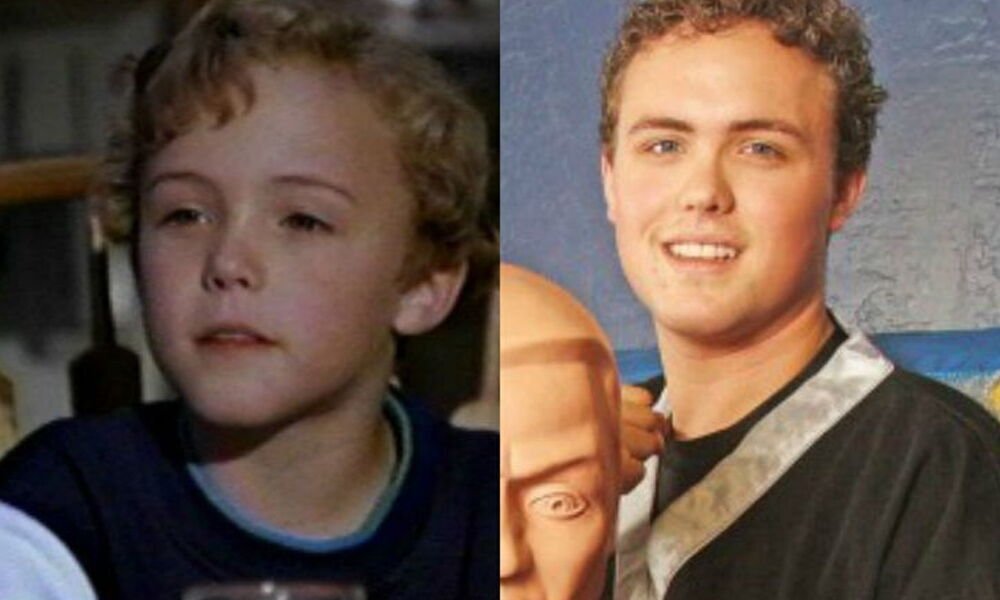
James Paul Roeske II was born on July 17, 1989, in Milwaukee, Wisconsin. His early years unfolded in a milieu shaped by performance, discipline, and familial support. By the age of 9, he had already entered national visibility through film. That precocity placed him among a small cohort of child performers whose recognition arrived unusually early.
His breakout came through the 1998 feature film 3 Ninjas: High Noon at Mega Mountain. In that project, he embodied the character Tum Tum, a role that became closely associated with his public identity. The part gave him a durable place in popular memory. It also established an expectation of continued screen work that he would later leave behind.
The same period included a minor television appearance in Saved by the Bell: The New Class. There, he appeared as Matthew, adding another credential to his early acting resume. These roles were not abundant, but they were sufficiently visible. For a young performer, that kind of concentrated exposure can be formative and constraining at once.
His family context mattered substantially. His parents, James Paul Roeske Sr. and Ellie Roeske, supported both of their children’s artistic and athletic pursuits. That support appears to have been infrastructural rather than ornamental. It helped create a stable setting for rigorous training and repeated performance demands.
The Child Actor Years
Child acting often creates a peculiar tension between visibility and volatility. James Paul Roeske II experienced that tension during the late 1990s and early 2000s. His public persona was tied to a single memorable character. Yet his offscreen development continued in parallel, shaped by discipline and kinesthetic training.
The Tum Tum role gave him immediate recognizability. It also tethered him to a genre of family adventure film that prized energetic ensemble work. Such roles typically demand comic timing, physical agility, and an easy rapport with the camera. Those attributes were already visible in his early work.
By 2004, his on-screen career had effectively receded. That year marked a pivot rather than a simple pause. The move away from acting was not a disappearance. It was a recalibration toward instruction, athletics, and studio life. That shift is central to understanding his later career.
Many former child actors struggle to locate a post-screen identity. Roeske II found one in embodied practice. He did not exchange performance for obscurity. He exchanged one disciplined public role for another.
Martial Arts Discipline
Martial arts became one of the defining structures of his adult life. Roeske II earned a second-degree black belt in American Freestyle Karate. That credential signifies sustained commitment, technical fluency, and a high tolerance for repetition. It also signals a transition from performer to mentor.
The martial arts path was not isolated from family life. His sister Emily pursued the same discipline, and the two eventually operated within the same instructional environment. Shared training often intensifies both competence and accountability. In their case, it appears to have reinforced a mutual professional direction.
By 2004, both siblings had earned second-degree black belts in Burbank, California. That timing is notable because it coincided with the end of James’s acting era. The date functions almost like a hinge. One chapter closed as another became structurally durable.
Karate also offered a vocabulary of order that differs from film work. Screen performance is contingent, conditional, and episodic. Martial arts instruction relies on regimen, progression, and visible milestones. That contrast helps explain the coherence of his later career.
Dance and Teaching Work
Roeske II did not confine himself to martial arts alone. He also became active in dance instruction and performance. He joined the Center Dance Ensemble and taught at A Time To Dance Performing Arts Studio. That dual involvement indicates a wide command of physical pedagogy.
Dance and karate share several practical demands. Both require balance, spatial awareness, timing, and memory. Both reward precision while leaving room for expressive variation. For an instructor, that overlap can be productive and unusually versatile.
His teaching work also suggests a community-oriented professional identity. He was not simply preserving a former talent. He was transmitting technique to recurring groups of students. That kind of work favors patience, continuity, and a willingness to manage many small improvements over time.
Surprise Family Karate, which he opened alongside Emily in Surprise, Arizona, became another focal point of this direction. The studio reportedly served more than 200 students monthly. That volume indicates more than hobby-level engagement. It points to a sustained local institution with routine attendance and stable demand.
Family Partnership and Shared Legacy
The Roeske family story is unusually intertwined. James Paul Roeske II and Emily Roeske both entered public life as children. Both later invested in martial arts. Both also moved away from film toward instruction and family-centered work. The symmetry is striking without being simplistic.
Emily Roeske was born on July 15, 1991. She became known for portraying Sophie Piper in the Halloweentown trilogy. Like her brother, she also earned a second-degree black belt. Her life shows a parallel pattern of early exposure, disciplined training, and adult redirection.
Their parents remain important to the broader account. James Paul Roeske Sr. and Ellie Roeske appear throughout the family narrative as stabilizing figures. They supported training, performance, and the eventual transition into teaching. That kind of sustained parental involvement often makes long-running child careers more viable.
The family legacy is therefore not just cinematic. It is pedagogical and athletic. The public remembers the siblings through roles and franchise associations. Yet their adult identities are rooted in hands-on instruction.
Current Work and Local Presence
Today, Roeske II is described as a karate and dance instructor based in Surprise, Arizona. That location matters because it places his work in a local rather than celebrity economy. He is not defined by red carpets or recurring publicity. He is defined by classes, students, and routine community contact.
His current work spans more than one discipline. He teaches martial arts, participates in dance performance, and sustains a studio environment. This breadth gives his career unusual durability. If one domain slows, another can absorb the energy.
The scale of his teaching activity also matters. A Time To Dance reportedly enrolls more than 150 dancers. That number suggests a genuinely active instructional footprint. It is the sort of detail that reveals a life organized around recurring obligation rather than nostalgic reputation.
The same can be said of Surprise Family Karate. A studio does not thrive on former fame alone. It thrives on trust, competence, and repeat participation. Roeske II’s present career depends on those less glamorous qualities.
Historical Milestones
| Year | Milestone | Significance |
|---|---|---|
| 1989 | Born in Milwaukee | Beginning of the Roeske timeline |
| 1998 | Starred in 3 Ninjas: High Noon at Mega Mountain | Breakout public recognition |
| 2004 | Earned second-degree black belt | Transition toward instruction |
| 2013 | Emily Roeske married | Family life entered a new phase |
| 2025 | Continued expanding programs in Arizona | Present day professional continuity |
These dates show a career that moves in deliberate phases. The first phase was public and cinematic. The second was athletic and instructional. The third is communal and sustained. None of those phases appears accidental.
The historical sequence also emphasizes how early prominence did not exhaust his usefulness. Instead, it created a platform for later authority. That is a subtler and rarer outcome than simple nostalgia. It reflects adaptability under changing circumstances.
Key Takeaways
James Paul Roeske II is best understood as a former child performer who built a credible second life in instruction. His early visibility came from 3 Ninjas: High Noon at Mega Mountain and a small television credit. His later identity came from karate, dance, and studio leadership. The transformation is substantial because it is practical, not cosmetic.
His family played a central role throughout the process. Emily Roeske followed a closely related trajectory, and their parents supported both children’s training. The siblings’ shared black belt achievement marks a notable intersection of art and discipline. Their adult work in Arizona extends that collaboration into daily practice.
Roeske II’s career is memorable not because it remained fixed, but because it changed form with discipline. He moved from screen presence to instructional presence. That is a quieter kind of success, but it is no less real.